
Double Materiality Analysis
The Foundation of Our Sustainable Actions
The double materiality analysis is a core component of our sustainability strategy and ensures compliance with the Corporate Sustainability Reporting Directive (CSRD). It enhances transparency regarding how our business activities impact people and the environment across the entire value chain—and conversely, how external developments such as climate change and societal shifts affect our company.
The focus lies on the systematic identification and evaluation of material impacts, risks, and opportunities (IROs) within Environmental, Social, and Governance (ESG) dimensions. This holistic perspective enables us to make well-informed strategic decisions, effectively manage our sustainability performance, and secure our long-term competitiveness.
Our Path to Double Materiality
The objective of our double materiality analysis was to identify the sustainability topics most relevant to our company and to our internal and external stakeholders. In the first half of 2025, we successfully completed this multi-stage analysis process in close collaboration with a specialized consulting firm, based on the requirements of the European Sustainability Reporting Standards (ESRS).
The process included several in-person and virtual workshops with employees from all relevant departments, as well as a stakeholder survey:
- Initial screening of relevant activities, topics, and stakeholders during a kickoff session (long list)
- Detailed evaluation of IROs at subtopic level in a second workshop
- Validation workshop with executive management for review and final approval
- Online survey of employees, selected customers, and suppliers to incorporate external perspectives
This structured approach enabled us to precisely identify our key sustainability topics and establish a solid foundation for our future sustainability strategy.
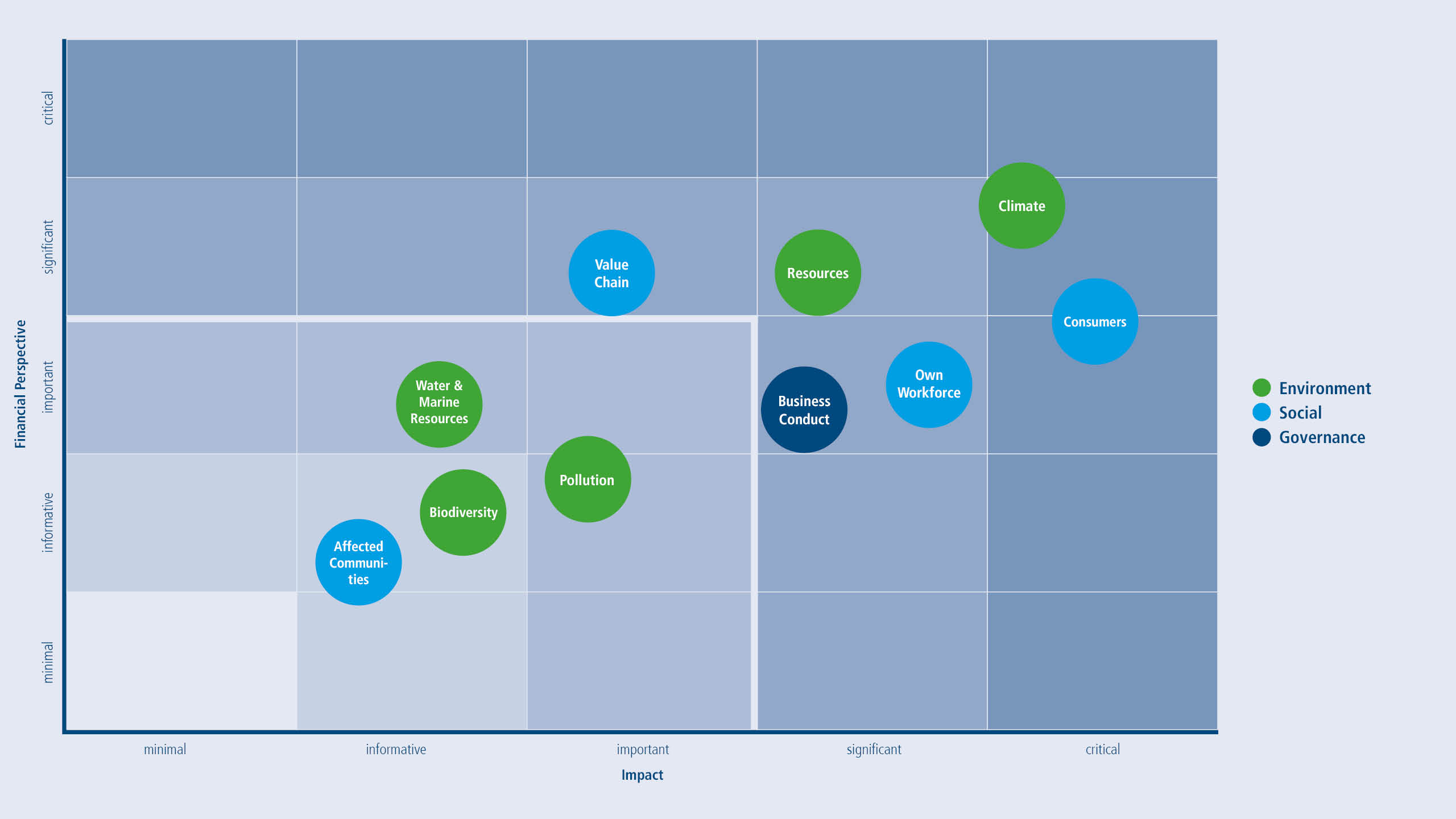
Our prioritized topics are illustrated in the following chart.
Our Focus Areas
In the environmental dimension, climate change adaptation, climate change mitigation, energy consumption, waste management, and the responsible management of resource inflows and outflows were identified as material. Pollution was assessed as non-material overall, as no significant impacts were identified in relation to air, water, soil, food resources, or microplastics. Nevertheless, certain aspects related to hazardous and concerning substances remain relevant for our company.
From a social perspective, working conditions and equal treatment—both within our workforce and along the value chain—are key priorities. Labor rights are also of significant importance. Additionally, transparent consumer information, compliance with high safety standards, and the development of market- and culture-specific products are essential.
Within governance, a strong corporate culture, whistleblower protection, fair and reliable supplier relationships, consistent anti-corruption measures, and responsible political engagement—such as participation in industry associations and standardization bodies—are considered particularly important.
The materiality analysis enables us to identify the most relevant topics within the broad field of sustainability and to address them systematically with targeted measures.
Non-Material Topics
Water consumption within our operations primarily occurs in sanitary facilities and the company restaurant; it does not play a significant role in our manufacturing processes. Indirect water impacts may arise from raw material extraction and upstream supply chain processes.
No negative impacts on biodiversity have been identified within our own operations. There are no land-use changes or soil degradation. The use of centrifuges has a positive effect, as it enables biodiversity to be measured without causing harm.
Based on current knowledge, we have not identified any significant impacts on affected communities, including Indigenous peoples, resulting from our operations or those of our suppliers.